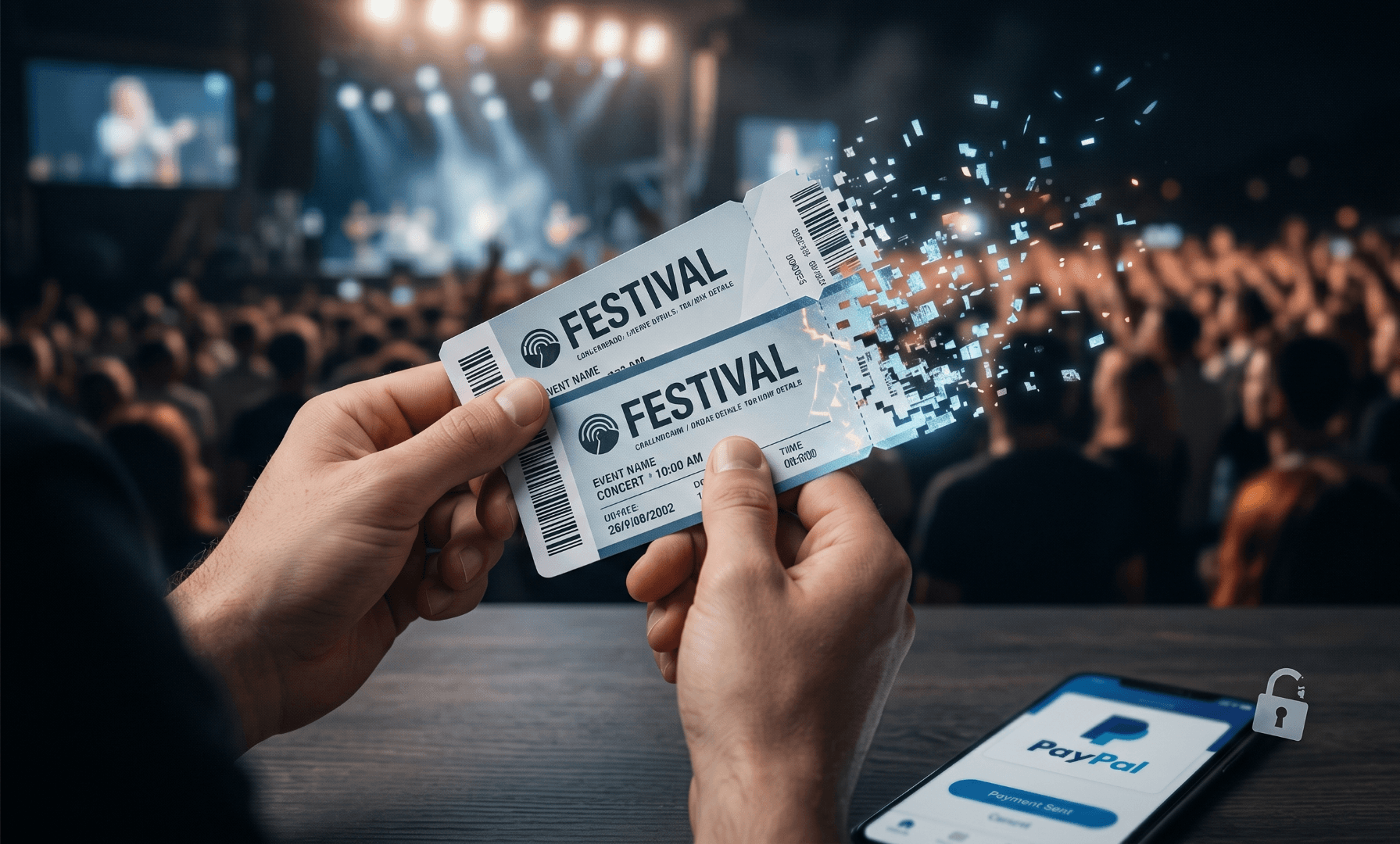
In 2024, ticket fraud cost UK fans close to £10 million. Action Fraud recorded approximately £9.7 million in losses that year, a near-50% jump from the year before, with music and festival fans making up the largest share of victims. The average loss was £365 per person, though fans chasing VIP packages or high-demand tours often lost far more.
These are not edge-case figures. One in eight Americans who bought concert tickets online over a two-year period was defrauded in some way. The scale of this is not about a few unlucky people. It is about an industry where demand regularly outstrips supply, and where that gap is being exploited, methodically, by organised scammers.
We built Pyngo because we were tired of seeing fans lose out. Not just to overpriced resale, but to people who had no tickets to sell at all. This guide covers how ticket scams actually work, what to watch for, and what to do if it has already happened to you.
When a major festival sells out in minutes, something predictable happens: thousands of fans who did not get through are now desperate, and a black market fills the gap almost instantly. Bots are estimated to account for up to 80% of online traffic during major on-sales, hoovering up stock before most fans can complete checkout. Those fans are then pushed toward unregulated secondary channels where the normal rules do not apply.
That desperation is the product scammers sell. They do not just take your money. They take it at the exact moment you are most emotionally invested and least likely to stop and think. Events like Electric Picnic and All Together Now in Ireland, or Glastonbury and Creamfields in the UK, sell out so fast that by the time most fans realise they missed out, the scam market is already running at full capacity.
This is by far the most common vector. Facebook Marketplace, Instagram DMs, TikTok, Snapchat. A seller with a believable profile, some mutual friends, maybe a photo of the ticket on their phone. The story is always plausible: a friend pulled out, exams got in the way, work came up. In August 2025, a single individual with over 6,000 followers on social media allegedly scammed hundreds of Electric Picnic fans using exactly this playbook, requesting payment via Revolut or PayPal Friends and Family, then disappearing. Victims only found out when a TikTok post from another victim went viral and triggered a Garda investigation.
The uncomfortable truth is that social familiarity is no longer a reliable signal of safety. Scammers hack real accounts and use them to advertise fake tickets to the account holder's own followers. Because the message comes from a "trusted" contact, people skip the checks they would otherwise do.
Fraudsters build sites that look almost identical to official platforms, often with a domain that differs by a single character. They appear in Google ads above the real results. They have reviews, logos, and customer service chat. They take your card details, deliver nothing, and vanish. HTTPS in the address bar means nothing here; every fake site has it. The only reliable check is looking up the domain independently and confirming it matches the official site linked from the artist or venue directly.
For many festivals, including Electric Picnic, official print-at-home tickets are simply not issued. Scammers sell convincing-looking PDFs to people who do not know this. The document looks fine. It scans as nothing at the gate. In other cases, a seller has a real ticket but transfers it to a new account immediately after selling the PDF version, making the buyer's copy void before they have even left the house.
If a seller tells you they cannot accept Goods and Services because of fees, or because their account is new, walk away. PayPal Friends and Family carries zero purchase protection by design. There is no dispute process and no refund mechanism. Asking for F&F payment is one of the clearest signals that something is wrong. The same applies to payment requests via Revolut personal transfer, Zelle, or cryptocurrency.
If you post about being scammed on Reddit or in a Facebook group, expect to be targeted a second time within hours. Accounts posing as recovery specialists, ethical hackers, or private investigators will reach out offering to get your money back for an upfront fee. They are scammers too. No legitimate recovery service asks for money before recovering anything.
Act fast. The sooner you report, the better the chance of recovering something.
In the UK, report to Action Fraud at actionfraud.police.uk. If you paid by credit card and the amount was over £100, contact your card provider about a Section 75 claim. This is a statutory right that makes your card provider jointly liable for the loss, and it is one of the strongest consumer protections available. For debit card purchases, ask about a chargeback instead. The 120-day chargeback window typically starts from the event date, not the purchase date, which protects fans who bought tickets months in advance.
In Ireland, report to An Garda Siochana's cybercrime unit and to the Competition and Consumer Protection Commission (CCPC). Bank transfers via SEPA are the hardest to recover, but reporting immediately gives the best chance. The Irish Sale of Tickets Act 2021 also means that resellers charging above face value for designated venues like the 3Arena or Aviva Stadium are breaking the law, which can strengthen your complaint.
For purchases from traders in other EEA countries, the European Consumer Centres Network handles cross-border complaints and recovered over nine million euros for consumers in 2023 alone. Find your national contact point at eccnet.eu.
Before you report, gather everything: screenshots of all conversations, the listing URL, the seller's profile, any phone numbers or email addresses used, and your payment receipt. The more evidence you have, the stronger your case.
The best protection is not needing any of this. Buy from authorised primary sellers who show you the full price upfront, who are transparent about who they are, and who have a clear process when things go wrong. Sign up to Pyngo to follow the events you care about and get notified the moment tickets go live, before the desperation sets in and the scammers take over.
Get alerts when tickets drop and join genuine conversations that give you the best odds to see the events you love.
Did you enjoy this read?
